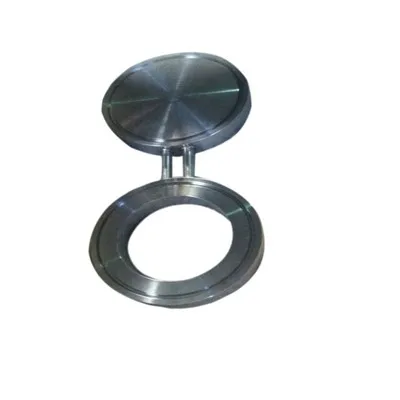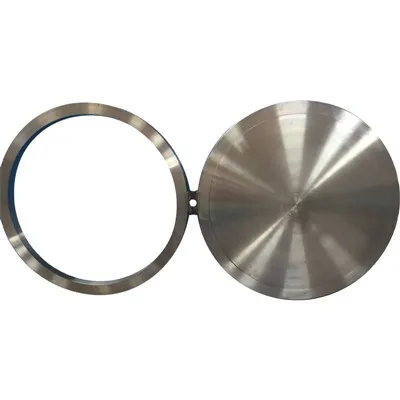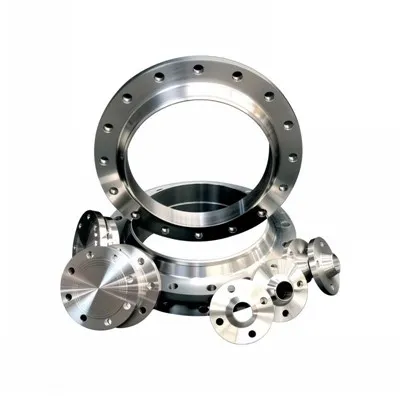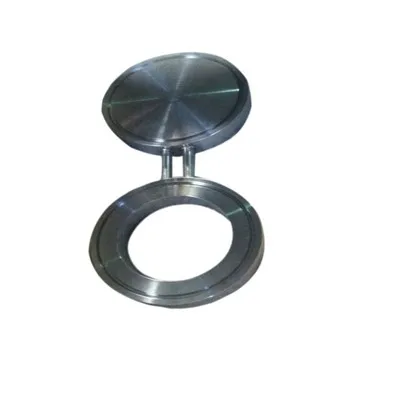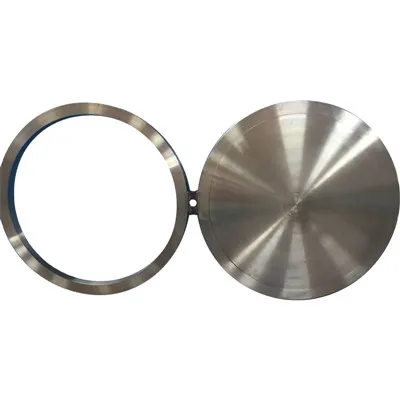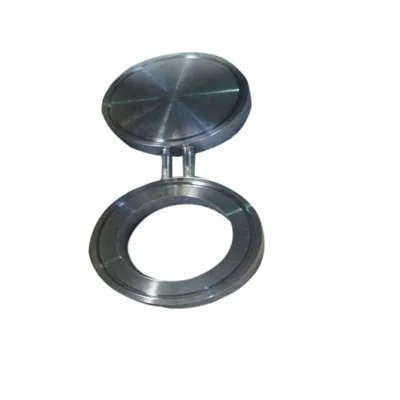
A Paddle Blind Flange (often simply called a Spade, Line Blind, or Solid Blank) is a critical piping component used for positive isolation of a pipeline. Unlike the Spectacle Blind (which combines a blind and a spacer in one unit), a Paddle Blind is a single, solid disc that stands alone.

What is a Paddle Blind?
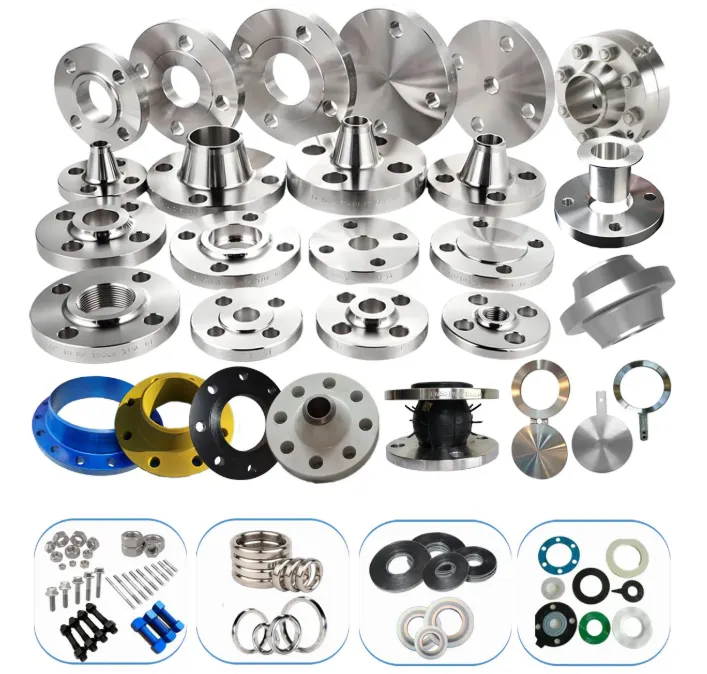
Definition: It is a flat, solid metal plate with no hole in the center, designed to fit between two pipe flanges to completely stop fluid flow.
Appearance: It looks like a "paddle" or a solid disc. It often has a tab or handle extending from the edge.
Function: When bolted between flanges, it creates a physical barrier. It is the safest method for isolating a line for maintenance, repair, or safety shutdowns because, unlike a valve, it cannot leak internally or be accidentally opened.
Key Difference: Paddle Blind vs. Spectacle Blind
|
Feature |
Paddle Blind (Spade) |
Spectacle Blind (Figure-8) |
|
Composition |
Single solid disc. |
Two pieces connected: one solid blind + one open ring (spacer). |
|
Operation |
Must be removed entirely to allow flow. A separate Spacer Ring must be inserted to restore flow. |
Rotated 180° in place to switch between "Blind" and "Open" positions. |
|
Usage Scenario |
Used for long-term isolation or when the line will remain closed for an extended period. |
Used for frequent switching between open and closed states (e.g., seasonal changes, frequent maintenance). |
|
Storage |
Requires storage space for the removed blind and the separate spacer ring. |
Self-contained; no loose parts to lose. |
|
Cost |
Generally lower cost (less material, simpler manufacturing). |
Higher cost (more material, more complex machining). |
|
Weight |
Lighter (only one piece). |
Heavier (includes the weight of the spacer ring). |
Design & Standards
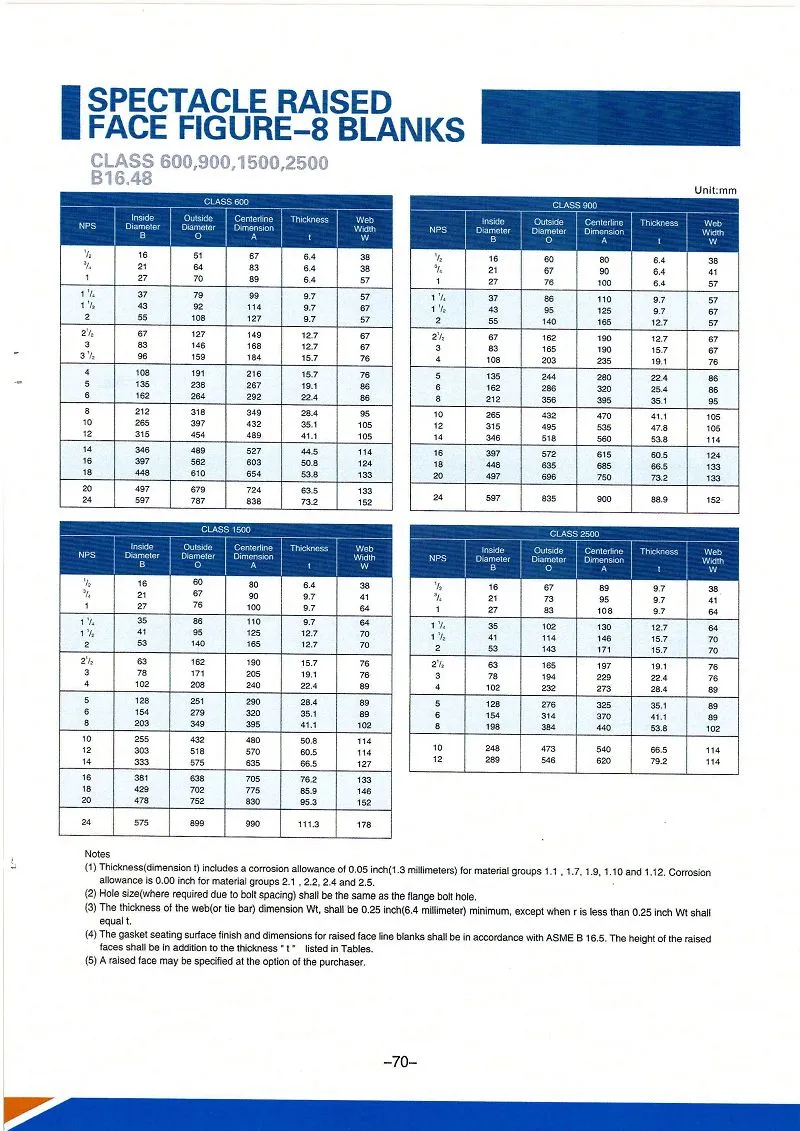
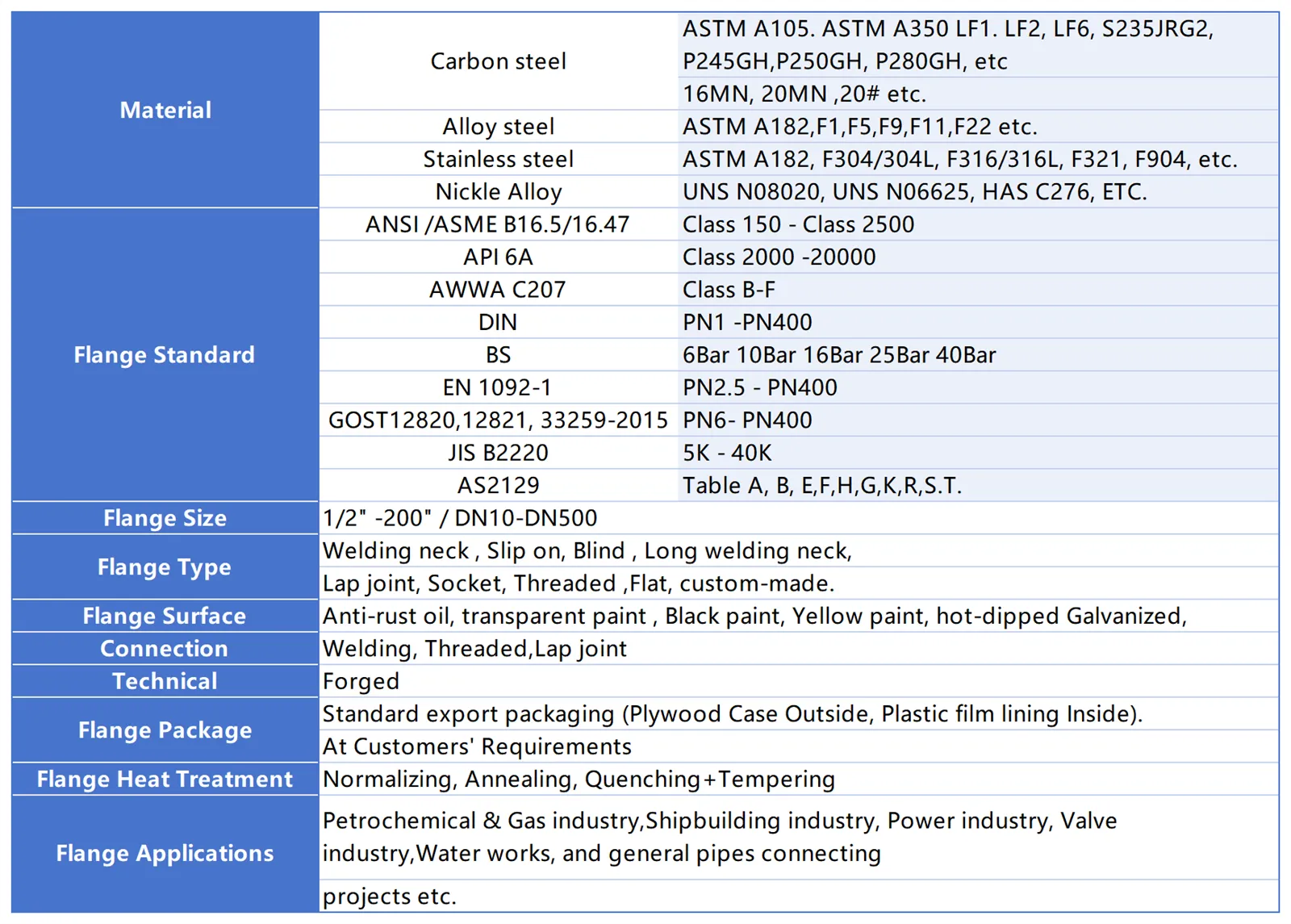
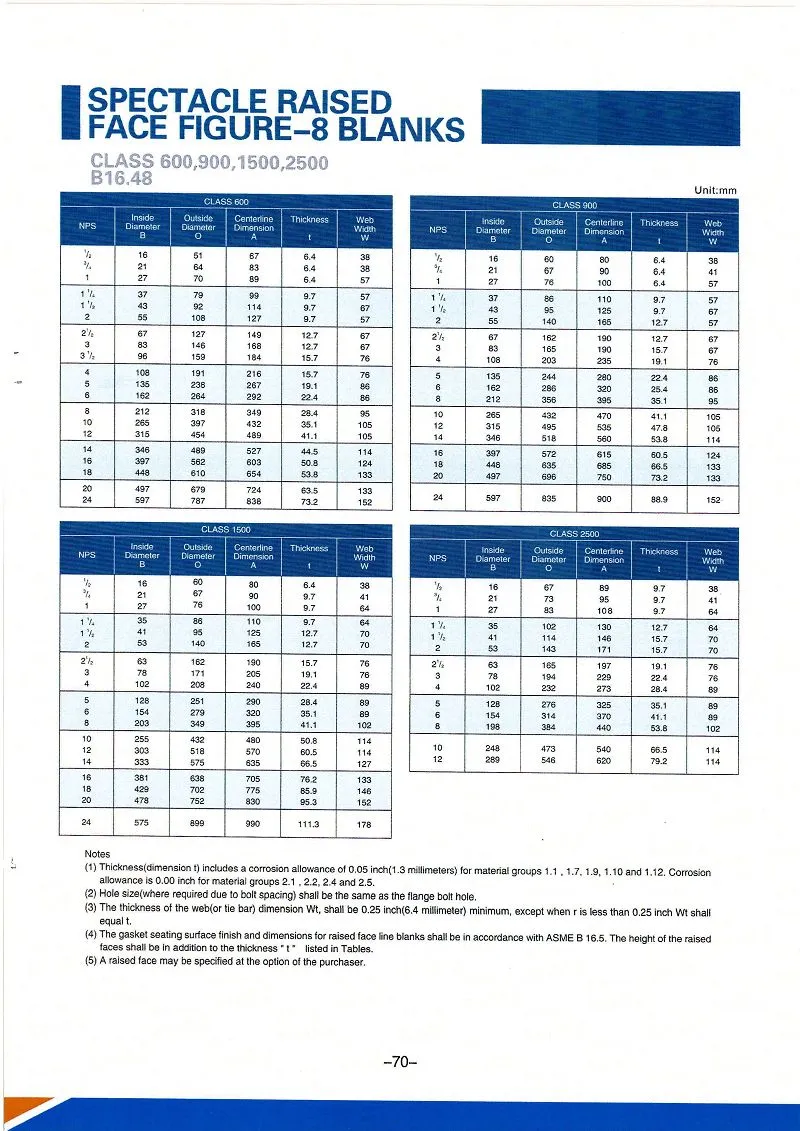
- Standard: Primarily manufactured according to ASME B16.48 (Line Blinds).
- Pressure Classes: Available in all ANSI classes: 150, 300, 600, 900, 1500, 2500.
Note: As pressure class increases, the thickness of the paddle blind increases significantly to prevent bowing under pressure.
- Face Types:
- Raised Face (RF): Standard for most classes.
- Flat Face (FF): Often used for Class 150.
- Ring Type Joint (RTJ): Mandatory for Class 900 and above (high pressure). The paddle blind will have a matching RTJ groove machined into it.
- The "Tab" or "Handle":
- Most Paddle Blinds include a small tab extending past the bolt circle.
- Purpose: It aids in handling/installation and serves as a visual indicator. If the tab is sticking out, the line is blinded. Some facilities paint the tab red for "Closed/Blind" and green for "Open" (though with a paddle blind, if the blind is installed, the line is always closed).
Materials
Paddle blinds are manufactured in virtually any material to match the pipeline:
- Carbon Steel: ASTM A105, A350 LF2/LF3.
- Stainless Steel: 304/304L, 316/316L, 321, 347.
- Duplex/Super Duplex: F51, F53, F55 (for offshore/corrosive service).
- Alloy Steel: F11, F22, F91 (for high temp/pressure).
- Exotics: Monel, Inconel, Hastelloy, Titanium.
Installation Procedure (Critical Safety Step)
Installing a Paddle Blind is a more involved process than rotating a Spectacle Blind:
1.Depressurize & Drain: Ensure the line is safe.
2.Unbolt: Remove all bolts from the flange connection.
3.Separate: Use a flange spreader tool to gently separate the flanges.
4.Remove Spacer (if present): If the line was previously open, a separate Spacer Ring must be removed.
5.Insert Paddle Blind: Insert the solid Paddle Blind. Ensure the gaskets are correctly placed on both sides of the blind.
6.Re-bolt & Torque: Re-insert bolts and tighten to the specific torque values required for the pressure class and gasket type.
7.Tagging: Attach a "Line Blinded" tag to the handle for safety tracking (Lockout/Tagout - LOTO).
When to Choose a Paddle Blind?
You should specify a Paddle Blind instead of a Spectacle Blind when:
- The isolation point is rarely changed (e.g., once a year during a turnaround).
- Budget is a constraint (Paddle Blinds + separate Spacers are cheaper than Spectacle Blinds).
- Space constraints prevent the rotation radius required for a Spectacle Blind.
- The pipeline diameter is very large (NPS 24"+), where a Spectacle Blind would be prohibitively heavy and difficult to rotate manually.
Summary for Procurement

If you are requesting a quote, ensure you specify:
- Type: Paddle Blind (Solid) AND Spacer Ring (if you need the open configuration too).
- Size: NPS (e.g., 12").
- Pressure Class: (e.g., Class 300, Class 1500).
- Material: (e.g., ASTM A105).
- Face Type: (RF, FF, or RTJ).
- Standard: ASME B16.48.

Hot Tags: paddle blind flange, China paddle blind flange manufacturers, suppliers, factory