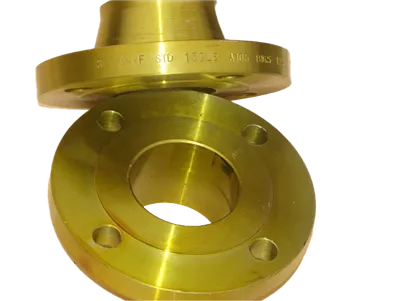
Industrial Pipe Flanges | Standard, Custom and Forged Steel Flanges
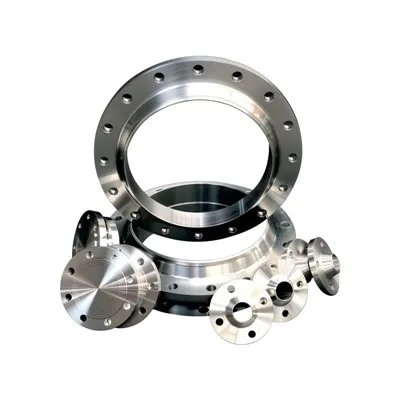
Industrial pipe flanges connect pipes, valves, pumps, and other piping components through bolted joints. They allow piping connections to be assembled, inspected, maintained, and dismantled when required by the system design.
Flange selection depends on the applicable standard, nominal size, pressure class or PN rating, material grade, flange type, facing, and operating conditions. These specifications must match the mating components and project requirements.
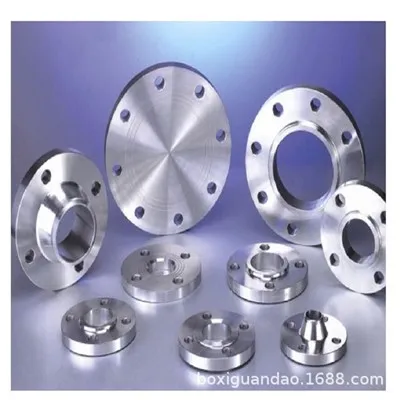
This product category covers common flange designs, including welding neck, slip-on, blind, socket weld, threaded, and lap joint flanges. Availability depends on the required standard, dimensions, material, and manufacturing specifications.
-
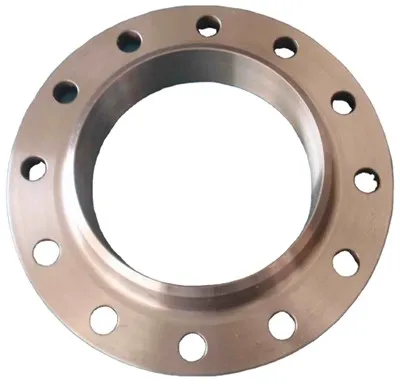
![Ansi B16.5 Class 150 Flange]() Ansi B16.5 Class 150 FlangeOur ANSI B16.5 Class 150 flange product line features superior metallurgical properties tailored for moderate pressure applications. Manufactured from premium carbon steel (A105), stainless steel
-
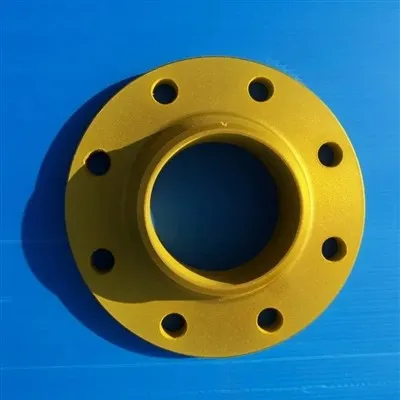
![Ansi B16.5 Class 300 Flange]() Ansi B16.5 Class 300 FlangeShanxi Xinshunda Flange Manufacturing Co., Ltd. introduces its heavy-duty ANSI B16.5 Class 300 flange series, engineered specifically for high-pressure and high-temperature industrial environments.
-
![Ansi B16.5 Class 400 Flange]() Ansi B16.5 Class 400 FlangeShanxi Xinshunda Flange Manufacturing Co., Ltd. proudly presents its specialized ANSI B16.5 Class 400 flange series, designed to meet the rigorous demands of high-pressure industrial piping systems.
-
![Ansi B16.5 Class 600 Flange]() Ansi B16.5 Class 600 FlangeShanxi Xinshunda Flange Manufacturing Co., Ltd. stands as a premier supplier of the ANSI B16.5 Class 600 flange, engineered to withstand extreme pressure and temperature conditions in critical
-
![Ansi B16.5 Class 900 Flange]() Ansi B16.5 Class 900 FlangeShanxi Xinshunda Flange Manufacturing Co., Ltd. specializes in the production of the ANSI B16.5 Class 900 flange, a critical component designed for ultra-high-pressure piping systems where standard
-
![Ansi B16.5 Class 1500 Flange]() Ansi B16.5 Class 1500 FlangeShanxi Xinshunda Flange Manufacturing Co., Ltd. delivers the pinnacle of pressure containment technology with our specialized ANSI B16.5 Class 1500 flange series.
-
![Ansi B16.5 Class 2500 Flange]() Ansi B16.5 Class 2500 FlangeShanxi Xinshunda Flange Manufacturing Co., Ltd. presents the ANSI B16.5 Class 2500 flange, the highest pressure rating defined within the ASME B16.5 standard for pipe sizes up to 24 inches.
-
![Class 150 Orifice Flange]() Class 150 Orifice FlangeShanxi Xinshunda Flange Manufacturing Co., Ltd. offers high-precision Class 150 Orifice Flanges designed specifically for accurate flow measurement in low to moderate pressure piping systems.
-
![Class 300 Orifice Flange]() Class 300 Orifice FlangeShanxi Xinshunda Flange Manufacturing Co., Ltd. delivers the Class 300 Orifice Flange, a specialized piping component designed for accurate flow measurement in moderate to high-pressure industrial
-
![Class 400 Orifice Flanges]() Class 400 Orifice FlangesShanxi Xinshunda Flange Manufacturing Co., Ltd. provides specialized Class 400 Orifice Flanges, a unique and critical component designed for flow measurement applications that exceed the pressure
-
![Class 600 Orifice Flanges]() Class 600 Orifice FlangesShanxi Xinshunda Flange Manufacturing Co., Ltd. manufactures the Class 600 Orifice Flange, a heavy-duty piping component engineered for accurate flow measurement in high-pressure industrial
-
![Class 900 Orifice Flanges]() Class 900 Orifice FlangesShanxi Xinshunda Flange Manufacturing Co., Ltd. specializes in the production of Class 900 Orifice Flanges, a critical component designed for flow measurement in ultra-high-pressure industrial


Flange standards and specifications
International projects may specify different flange standards depending on the piping system, equipment design, and regional requirements. Confirm the governing standard and edition before ordering.
|
Standard |
Product scope |
|
ASME B16.5 |
Pipe flanges and flanged fittings within the standard's applicable size and pressure limits |
|
ASME B16.47 |
Large-diameter steel pipe flanges |
|
ASME B16.36 |
Orifice flanges |
|
ASME B16.48 |
Steel line blanks |
|
API 6B |
Flanges and related connections within the standard's defined scope |
|
EN 1092-1 |
Circular steel flanges with PN designation |
|
ISO 7005-1 |
Metallic flanges within the standard's applicable scope |
|
JIS B2220 |
Steel pipe flanges |
|
BS 4504 |
British flange standard; confirm the applicable edition and project requirements |
|
AWWA standards |
Flanges and connections covered by the relevant waterworks standard |
|
DIN standards |
Applicable German national or legacy flange standards |
|
KS standards |
Applicable Korean flange standards |
|
GOST 33259 |
Flanges for piping, equipment, and apparatus within the standard's scope |
Specification note: Standards are not automatically interchangeable. Check the dimensions, bolt-hole pattern, facing, pressure-temperature rating, material requirements, and standard edition before approving a flange for a piping system.
The standards listed above identify common product specifications. Actual supply capability and compliance must be confirmed for the requested product and order.
Dimensions and pressure ratings
Nominal pipe size (NPS), nominal diameter (DN), pressure designation, and flange dimensions are key factors in product selection.
|
Standard |
General size scope |
Pressure designation |
|
ASME B16.5 |
NPS 1/2 through NPS 24, subject to applicable standard limits |
ASME Class designations, with applicable size and class combinations |
|
ASME B16.47 |
NPS 26 through NPS 60 |
Applicable Class designations depend on the standard and flange series |
|
EN 1092-1 |
DN and PN combinations defined by the applicable standard |
PN designations vary according to flange type, size, and standard requirements |
These ranges describe general standard coverage rather than confirming that every size and pressure combination is available.
For technical selection, verify the nominal size, pressure designation, flange type, facing, material grade, and applicable standard. Pressure-temperature ratings must be checked against the relevant standard, material, and design conditions.
For non-standard dimensions or project-specific requirements, provide an approved drawing or dimensional specification for review.
Flange types and facing options
Flange type determines the connection design and installation method. Facing is a separate selection factor and must be compatible with the mating flange, gasket, and applicable standard.
|
Flange type |
Design and selection considerations |
|
Welding neck flange |
Features a tapered hub and a butt-weld connection to the pipe. Selected according to the piping design and service requirements. |
|
Slip-on flange |
Fits over the pipe and is generally attached by fillet welds. Suitability depends on the applicable design and service conditions. |
|
Blind flange |
Has no central bore and closes a flanged opening, such as a pipe end or equipment nozzle. |
|
Socket weld flange |
Uses a socket to receive the pipe and is generally used for smaller-bore connections where permitted by the design. |
|
Threaded flange |
Connects through compatible pipe threads and may be specified where welding is unsuitable or restricted. |
|
Lap joint flange |
Used with a compatible stub end and allows flange rotation to assist bolt-hole alignment. |
Common facing options
Raised Face (RF): A raised sealing surface used with compatible gaskets and mating flange faces.
Flat Face (FF): A flat sealing surface commonly specified for compatible equipment and piping connections.
Ring Type Joint (RTJ): A grooved sealing arrangement designed for a compatible metallic ring gasket and mating flange.
Facing availability and permissible combinations depend on the governing standard and flange design. Surface finish requirements should be specified according to the applicable standard, gasket requirements, and project documents.
Materials and material grades
Material selection depends on the process medium, design temperature, pressure, corrosion exposure, mechanical property requirements, and governing material specification.
|
Material category |
Common grades or material designations |
Selection considerations |
|
Carbon steel |
ASTM A105 / A105N |
Common forged carbon steel flange material; confirm the applicable specification and required heat treatment. |
|
Low-temperature carbon steel |
ASTM A350 LF2 |
Used where the applicable low-temperature mechanical property requirements are specified. |
|
Austenitic stainless steel |
ASTM A182 F304 / F304L, F316 / F316L, F321, F347 |
Selection depends on the required grade, corrosion environment, temperature, and project specification. |
|
Chromium-molybdenum alloy steel |
ASTM A182 F11, F22 |
Used in applicable alloy steel piping and equipment designs; confirm material grade and heat treatment requirements. |
|
Duplex stainless steel |
ASTM A182 F51 / UNS S31803 |
Consider the specified grade, mechanical requirements, and corrosion environment. |
|
Super duplex stainless steel |
UNS S32750 under the applicable product material specification |
Confirm the exact material specification, grade, and required documentation. |
|
Nickel alloys |
Inconel 625, Monel 400, Hastelloy C276 under applicable material specifications |
Selection depends on the process medium, temperature, corrosion conditions, and design requirements. |
|
Titanium |
Grade 2 under the applicable product material specification |
Confirm material compatibility, mechanical requirements, and suitability for the specified flange design. |
Material names alone do not establish compliance. The purchase specification should identify the required material standard, grade, heat treatment, testing, and documentation.
Material Test Reports (MTRs), heat identification, and traceability documents should be confirmed according to the order requirements and the supplier's actual documentation capability.

Flange manufacturing requirements vary according to the material, dimensions, product design, quantity, and applicable specification.
Depending on confirmed manufacturing capabilities, customization requirements may include:
- Non-standard dimensions and thicknesses based on approved drawings.
- Bore diameter, hub geometry, and connection dimensions.
- Bolt-hole diameter, quantity, pitch circle diameter, and orientation.
- Facing configuration and specified surface finish.
- Material grade and heat treatment requirements.
- Orifice flange configurations and pressure tap details, where applicable.
- Surface protection, marking, and packaging requirements.
For drawing-based orders, provide the latest approved drawings, applicable standard, material requirements, dimensional tolerances, inspection criteria, and required documentation.
Manufacturing route, machining capability, material availability, and production lead time should be confirmed against the specific order. Do not assume that every material or custom configuration is available for every flange size.
Quality control and inspection documentation
Inspection requirements should be agreed before production. The inspection plan depends on the governing product standard, material specification, purchase order, and project acceptance criteria.
Typical inspection categories include:
- Material verification: Review material identification, applicable material specifications, and required documentation.
- Dimensional inspection: Check flange diameter, thickness, bore, bolt-hole pattern, facing dimensions, and other specified dimensions against approved drawings and applicable standards.
- Chemical and mechanical testing: Conduct the tests required by the applicable material specification and purchase order.
- Non-destructive examination: UT, MT, or other specified methods may be required according to the material, product specification, and agreed inspection plan.
- Surface inspection: Check visible condition and specified surface requirements.
- Documentation review: Verify required material reports, inspection records, traceability information, and other order documents.
Depending on the order requirements and actual availability, quality documentation may include:
- Material Test Reports.
- Dimensional inspection reports.
- Chemical and mechanical test results.
- Non-destructive testing reports.
- Heat and material traceability records.
- Third-party inspection documentation.
EN 10204 Type 3.1 documentation should be specified when required and confirmed for the relevant product and order.
ISO 9001 certification, PED-related conformity documentation, and other certifications must be supported by valid evidence covering the applicable organization, product, and scope. The applicable regulatory requirements must be assessed separately from the dimensional flange standard.
Third-party inspection requirements should identify the inspection agency, scope, acceptance criteria, and inspection stage before order confirmation.
Applications and Compatibility
Industrial pipe flanges are used to connect piping, valves, pumps, and equipment in various industrial systems. Suitability depends on the actual operating conditions and engineering requirements.
Oil And Gas
Flanged connections in production, processing, transmission, and associated piping systems.
01
Chemical And Petrochemical
Process piping carrying fluids that require specific material compatibility and corrosion considerations.
02
Power Generation
Connections in steam, water, and utility systems where the selected flange meets the applicable design requirements.
03
Water And Wastewater
Connections for pumps, valves, treatment equipment, and distribution systems.
04
Industrial Equipment
Flanged connections for compatible pumps, vessels, skids, and process equipment.
05
Application descriptions do not replace engineering verification. Confirm the design pressure, temperature, process medium, material compatibility, gasket requirements, and applicable piping code before final selection.
Ordering information and RFQ requirements
Providing complete technical information helps reduce specification discrepancies and supports accurate quotation.
|
RFQ requirement |
Information to provide |
|
Standard |
Applicable standard and edition |
|
Nominal size |
NPS or DN |
|
Pressure designation |
ASME Class or PN rating |
|
Flange type |
Welding neck, slip-on, blind, socket weld, threaded, lap joint, or another specified type |
|
Facing |
RF, FF, RTJ, or another specified configuration |
|
Material |
Applicable material standard and grade |
|
Quantity |
Required quantity for each size and grade |
|
Drawings |
Approved drawings or dimensional details for non-standard items |
|
Inspection |
Required tests, acceptance criteria, and third-party inspection scope |
|
Documentation |
MTRs, inspection reports, certificates, and other specified project documents |
|
Surface protection |
Required coating, corrosion protection, marking, and packaging |
|
Delivery |
Destination, requested delivery date, and shipping requirements |
MOQ, stock availability, production lead time, and delivery arrangements depend on the required specification, material, quantity, inspection requirements, and order schedule. Confirm these details before placing an order.
Request a quotation by providing the flange standard, nominal size, pressure designation, material grade, facing, quantity, and technical drawings where applicable.
Frequently Asked Questions
As one of the most professional flange manufacturers and suppliers in China, we also support customized service with competitive price. We warmly welcome you to wholesale high quality flange for sale here from our factory. For quotation, contact us now.
Popular Products